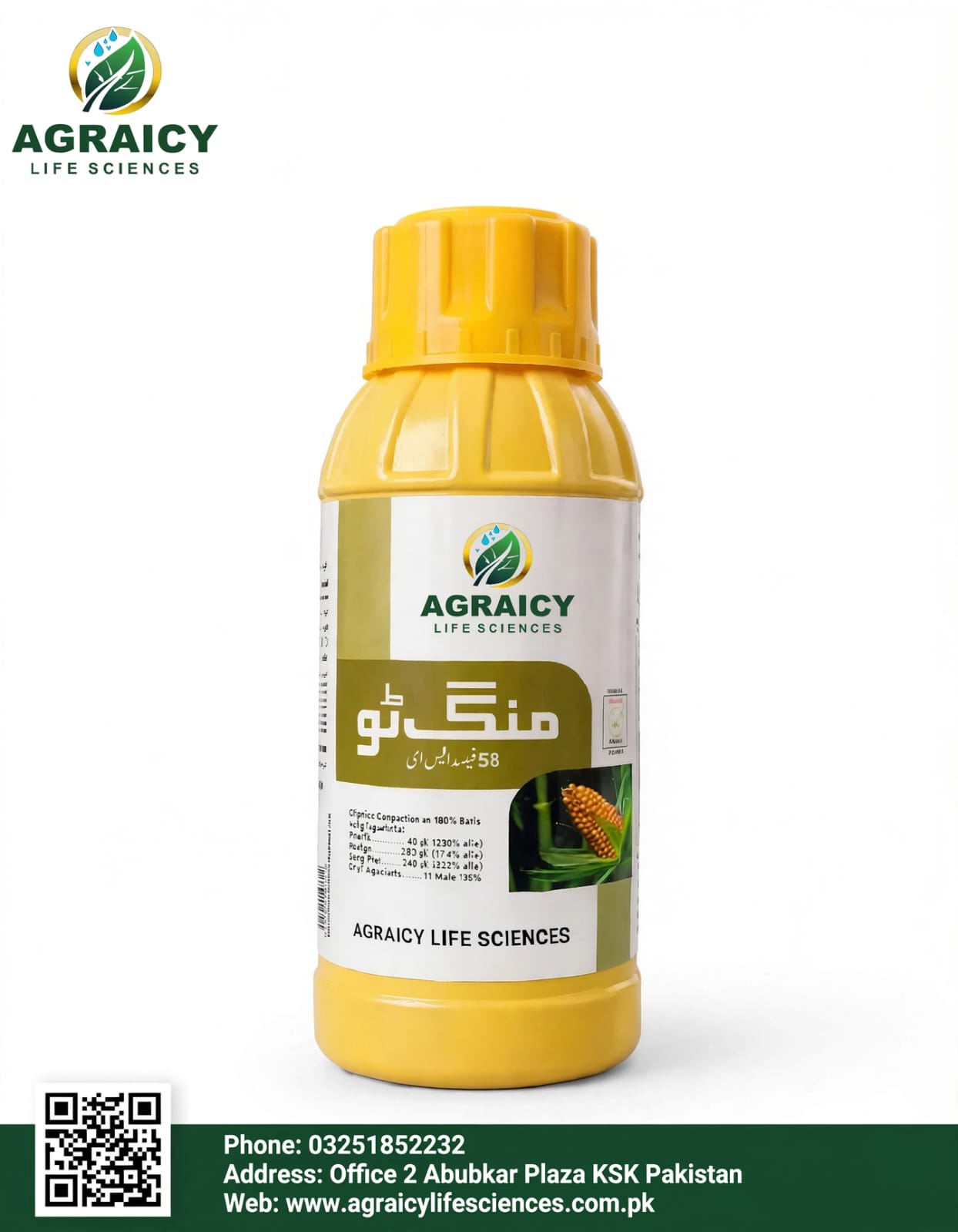
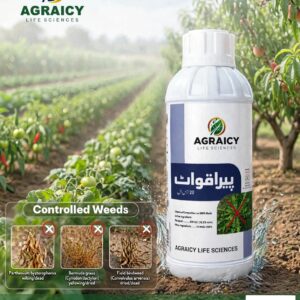
Mingtu (e.g., Mingtu 58% SE) is a powerful, selective, post-emergence systemic herbicide used in maize (corn) to eliminate broadleaf weeds, annual grasses, and sedges. It contains three active ingredients: Atrazine, Mesotrione, and Acetochlor.
How Mingtu Works
Mingtu works through a combined or “tri-action” mode of action, absorbing into weeds through both their leaves and roots:
-
- Mesotrione (4%): Inhibits the HPPD enzyme, preventing the plant from synthesizing plastoquinone and carotenoids. This causes the weed’s chlorophyll to break down, leading to distinct bleaching and starvation.
- Atrazine (20%): Binds to the plastoquinone-binding protein in Photosystem II, shutting down the electron transport process. This causes severe oxidative damage and plant starvation.
- Acetochlor (34%): Acts as a chloroacetanilide that halts root and shoot growth, preventing cell elongation and cell division.
-
- Broad-Spectrum Weed Control: Eliminates competing weeds—such as Cyperus rotundus (nut grass), Bathua, and Jangli Palak—so the maize can access essential water, sunlight, and nutrients.
- Dual Action: The formula offers both post-emergence burn-down (through foliage) and residual pre-emergence control (through the soil), helping to prevent new weeds from sprouting after application.
Guidelines for Application
- Target Crops: Maize (corn), sorghum, and sugarcane.
- Application Method: Applied as a foliar spray. It is typically sprayed when weeds are in their early growth stages (between 2 to 6 leaf stages) and the maize is at the \(V_{2}\) to \(V_{6}\) stage.
- Safety Precaution: To avoid harming the maize crop, do not apply it when the plant is under severe stress from drought, waterlogging, or nutrient deficiency.