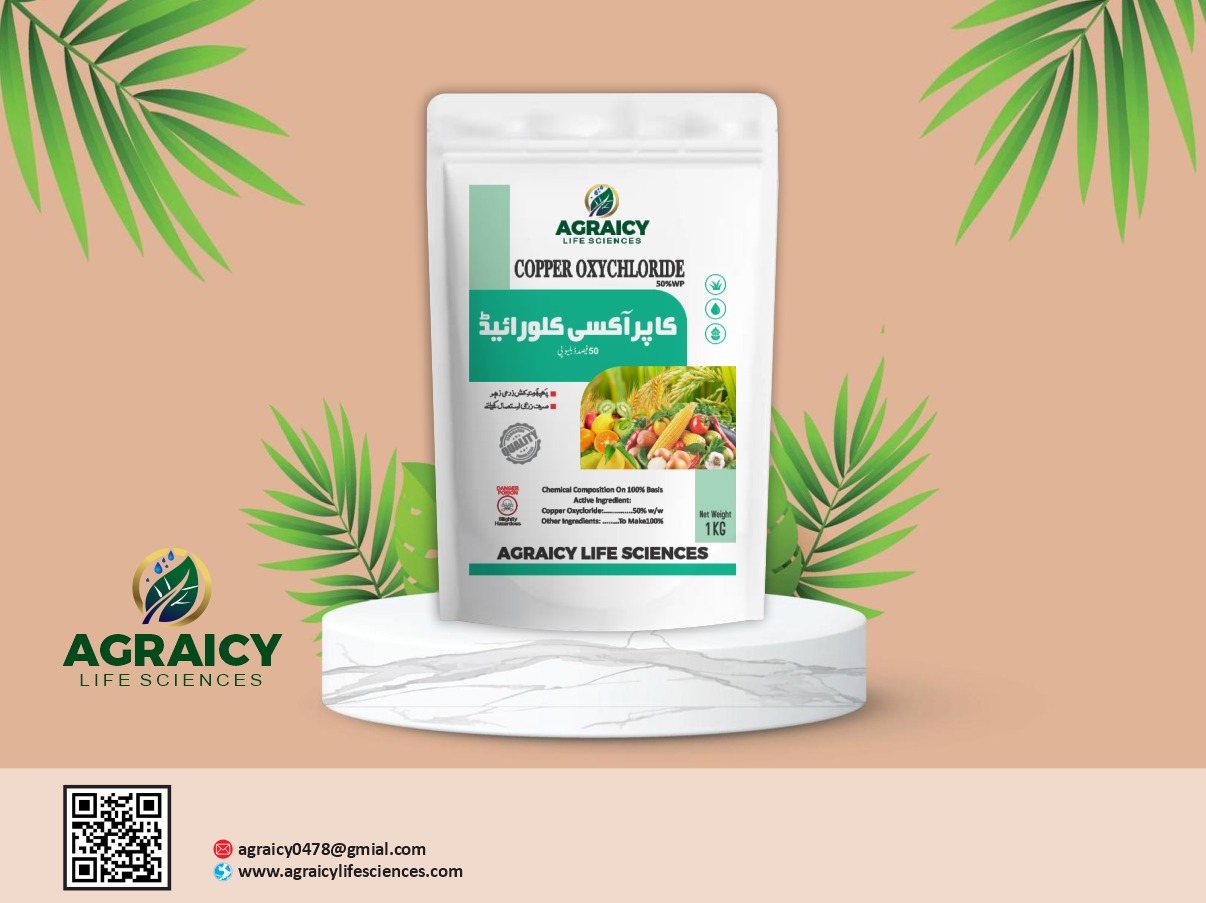
Copper oxychloride is a broad-spectrum, protective contact fungicide and bactericide used to prevent diseases like downy mildew, blight, anthracnose, and leaf spots in fruits, vegetables, and ornamentals. It works by releasing copper ions (
) on plant surfaces, which inhibit spore germination and pathogen growth.
Key functions and benefits of copper oxychloride include:
Disease Prevention: Acts as a persistent,, protective barrier on leaves and stems against fungal and bacterial infections.
Low Resistance Risk: Due to its multi-site mode of action (disrupting cell membranes, enzymes, and respiration), pathogens rarely develop resistance to it.
Wound Healing & Stress Reduction: It helps accelerate healing in crops after pruning, reducing the risk of infection and stress.
Enhanced Crop Quality: Regular use can result in healthier, higher-yielding, and better-quality produce.
Micronutrient Supply: Provides copper, which is essential for photosynthesis and chlorophyll production.
Application Methods: It is typically applied as a foliar spray and should be used proactively before or at the first sign of infection. It is highly effective in humid conditions where, for instance, it protects garlic against rust.